How to Choose the Right BLDC Motor Controller: A Practical Buying Guide
If you’ve ever burned through three motor controllers on a single project, you already know that picking the right BLDC motor controller is harder than it looks. The spec sheets don’t tell the whole story. Voltage ratings, current limits, and communication protocols are just the starting point—the real challenges hide in thermal management, commutation algorithms, and how the drive handles fault conditions.
Table of Contents
- What a BLDC Motor Controller Actually Does
- Commutation Methods: Sensored, Sensorless, and FOC
- Key Specifications Explained
- Matching Controller to Motor: A Step-by-Step Process
- Controller Architectures: Integrated vs Separate
- Thermal Management: The Silent Killer
- Real-World Application Examples
- Troubleshooting Common Controller Issues
- Frequently Asked Questions
This guide is written for engineers, makers, and procurement professionals who need to get it right the first time. We’ll walk through every specification that actually matters, explain the trade-offs between different controller architectures, and give you a systematic process for matching a controller to your motor and application.
What a BLDC Motor Controller Actually Does
Before diving into specifications, let’s be clear about the controller’s job. A BLDC motor controller (also called a motor drive, ESC, or inverter depending on the context) performs several critical functions:
Commutation: BLDC motors don’t have brushes to automatically switch the current direction. The controller must electronically determine rotor position and energize the correct stator windings at the right moment. It does this either by reading Hall effect sensors (sensored commutation) or by analyzing back-EMF (sensorless commutation).
Current regulation: The controller modulates the voltage applied to each phase to control the current flowing through the motor windings. This directly controls torque output.
Speed or position control: Depending on the application, the controller may implement speed regulation (using tachometer feedback or back-EMF), position control (using an encoder or resolver), or simple open-loop control.
Protection: A good controller monitors for overcurrent, overvoltage, undervoltage, overtemperature, and short circuits. It should handle these conditions gracefully—protecting both itself and the motor.
Interface: The controller translates user commands (analog voltage, PWM signal, serial communication, or CAN bus) into motor actions.
Understanding these functions is essential because different controllers excel at different aspects. A drone ESC optimized for fast throttle response makes a terrible choice for an e-bike that needs smooth low-speed operation and regenerative braking.
Commutation Methods: Sensored, Sensorless, and FOC
Hall Sensor (120°) Commutation
This is the most straightforward approach. Three Hall effect sensors mounted on the stator detect the rotor magnet position and tell the controller which phases to energize. The controller drives the motor in six-step (trapezoidal) mode.
Advantages:
– Simple and reliable at low speeds
– Good starting torque
– Low cost for the sensor implementation
– Well-suited for applications with frequent start-stop cycles
Disadvantages:
– Torque ripple at every commutation point (six times per electrical revolution)
– Not ideal for smooth low-speed operation
– Hall sensors add wiring complexity and a potential failure point
– Requires precise sensor alignment during assembly
Sensorless Back-EMF Commutation
Instead of physical sensors, the controller monitors the voltage on the unpowered phase to detect the zero-crossing point of the back-EMF. From this, it infers rotor position.
Advantages:
– No Hall sensors needed (simpler motor, fewer wires, lower cost)
– Good for high-speed applications where sensor bandwidth might be limiting
Disadvantages:
– Cannot detect position at zero or very low speed (no back-EMF to measure)
– Poor starting torque and unreliable start-up
– Commutation timing errors at varying speeds and loads
– Not suitable for precise position control
Field Oriented Control (FOC)
FOC is the most sophisticated commutation method. It uses mathematical transformations (Clarke and Park transforms) to convert the three-phase motor currents into a rotating reference frame aligned with the rotor’s magnetic field. This creates two independent control variables:
- Id (d-axis current): Controls the magnetic flux. In most applications, this is driven to zero
- Iq (q-axis current): Directly controls torque, analogous to a brushed DC motor
Advantages:
– Smoothest torque output with minimal ripple
– Maximum efficiency (current vector is always optimally aligned)
– Precise speed and torque control across the full speed range
– Enables regenerative braking naturally
– Superior low-speed performance
Disadvantages:
– Requires significant DSP processing power
– Higher cost (more sophisticated hardware and software)
– Needs accurate rotor position information (typically from an encoder or resolver)
– More complex tuning
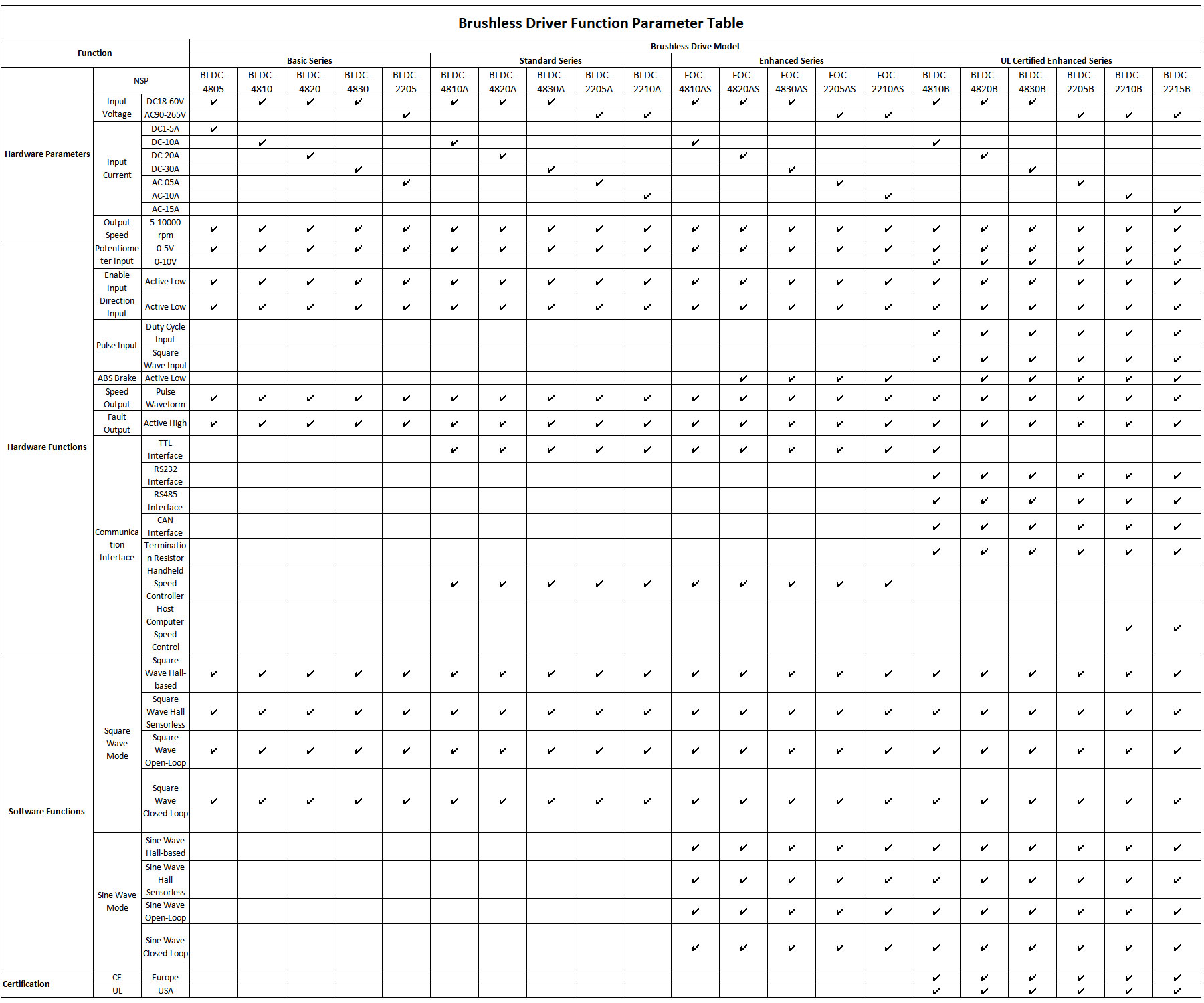
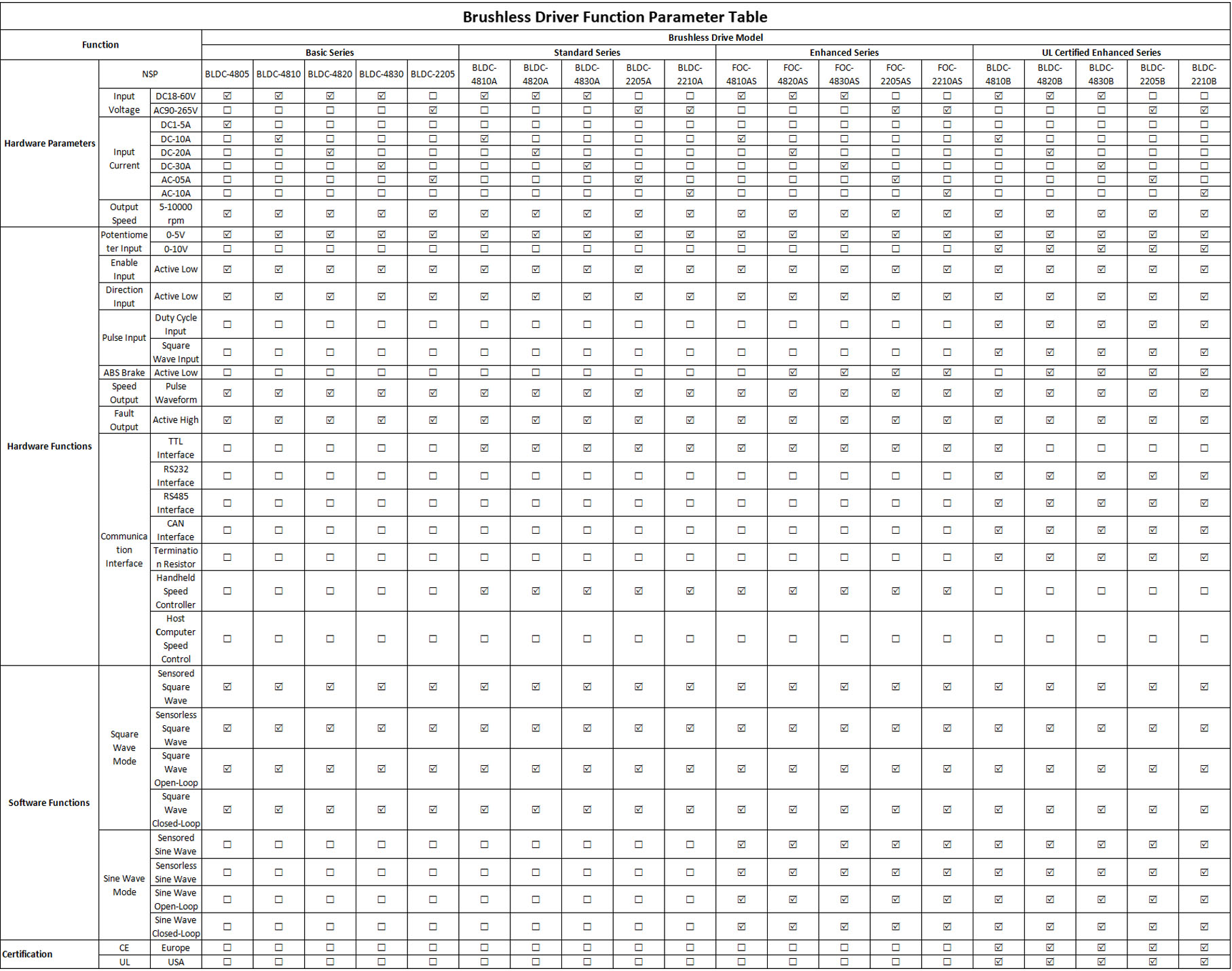
For most industrial and high-performance applications, FOC is the gold standard. The NSP-FOC4830AS series drives, for example, implement FOC with Hall sensor or encoder input and support up to 1500W, making them suitable for a wide range of industrial BLDC applications.
Key Specifications Explained

Voltage Rating
The controller’s voltage rating must match your power supply. But don’t just look at the nominal voltage—check both the minimum and maximum:
- Minimum operating voltage: Below this, the controller may shut down or behave unpredictably. Important for battery-powered systems where voltage drops under load.
- Maximum voltage: Exceeding this damages the MOSFETs. Consider voltage transients—if your 48V power supply can spike to 55V during regenerative braking, you need a controller rated for at least 60V.
Common voltage ranges:
– 12V-24V: Small DC motors, hobby applications, some garden tools
– 24V-48V: E-bikes, scooters, small industrial equipment
– 48V-72V: Industrial BLDC motors, higher power applications
– 200V-400V: Three-phase industrial drives, HVAC compressors
Current Rating
This is where most people get confused. Controllers typically specify several current values:
- Continuous current: The current the controller can sustain indefinitely (with adequate cooling). This determines your continuous torque capability.
- Peak current: The maximum current for a short duration (typically 3-10 seconds). This determines your peak/acceleration torque.
- Phase current vs bus current: The phase current is what flows through the motor windings. The bus (DC input) current is what your power supply must provide. The relationship depends on the PWM duty cycle and motor efficiency. Phase current is typically 1.4-1.7× the bus current.
Rule of thumb: Select a controller where your motor’s rated continuous current is no more than 75% of the controller’s continuous rating. This provides thermal margin and extends the controller’s life.
PWM Frequency
The controller switches the MOSFETs at a high frequency to regulate the effective voltage applied to the motor. Common PWM frequencies range from 8 kHz to 32 kHz.
Higher PWM frequencies mean:
– Less audible motor whine (above 20 kHz is essentially silent)
– Lower current ripple in the motor windings
– Higher switching losses in the controller (more heat)
Lower PWM frequencies mean:
– Higher efficiency (less switching loss)
– More audible noise
– Larger current ripple
For most applications, 16-20 kHz provides a good balance. If silent operation is critical (medical equipment, office environments), look for controllers with 32 kHz or higher PWM capability.
Control Interface
How will you command the controller? Common options:
- PWM/duty cycle: Simple and universal. A 1-2ms pulse width maps to speed or torque. Used in RC vehicles and simple automation.
- Analog voltage (0-5V or 0-10V): Maps voltage level to speed or torque. Simple but susceptible to noise.
- UART/Serial: Digital communication for setpoint commands, parameter configuration, and status monitoring. Good for integration with microcontrollers.
- CAN bus: Industrial-grade communication supporting multiple devices on a shared bus. Essential for multi-axis systems and automotive applications.
- Modbus: Standard industrial protocol, widely supported by PLCs and HMIs.
Think about your control architecture early. If you’re building a multi-axis machine, CAN bus saves significant wiring compared to individual analog signals.
Protection Features
Essential protection features to look for:
- Overcurrent protection (OCP): Both instantaneous (hardware trip) and timed (software limit). Should protect against short circuits and sustained overload.
- Overvoltage protection (OVP): Critical for systems with regenerative braking, where the motor acts as a generator and can pump voltage back into the DC bus.
- Undervoltage protection (UVP): Prevents erratic operation at low supply voltage.
- Overtemperature protection (OTP): Both junction temperature (MOSFET die) and ambient temperature monitoring.
- Hall sensor fault detection: Detects disconnected or misaligned Hall sensors.
- Stall detection: Identifies when the motor is stalled (drawing high current with no motion) and takes protective action.
Matching Controller to Motor: A Step-by-Step Process
Step 1: Know Your Motor Parameters
Before selecting a controller, you need:
- Rated voltage: The voltage at which the motor is designed to operate
- Rated current (phase): The continuous current at rated load
- Peak current: The maximum current for short durations
- Resistance and inductance: Per phase values, which affect current rise time and PWM requirements
- Back-EMF constant: Relates motor speed to generated voltage
- Torque constant: Relates current to torque output
- Number of poles: Determines the electrical speed relative to mechanical speed
- Sensor type: Hall sensors (how many?), encoder (resolution?), or sensorless
If you don’t have these specs, measure them. You can measure resistance with a multimeter, inductance with an LCR meter, and back-EMF constant by spinning the motor at known speed and measuring the generated voltage.
Step 2: Calculate Power Requirements
Motor power = Torque (N·m) × Speed (rad/s)
For a motion profile with varying speed and torque, calculate the RMS power over the duty cycle. The controller’s continuous power rating should exceed the RMS power by at least 20%.
Also calculate peak power and verify it doesn’t exceed the controller’s peak rating for the required duration.
Step 3: Verify Electrical Compatibility
- Supply voltage matches controller’s rated range
- Motor’s rated current ≤ 75% of controller’s continuous current rating
- Motor’s peak current ≤ controller’s peak current rating
- PWM frequency is compatible with motor inductance (higher inductance motors may need lower PWM frequency for adequate current rise)
Step 4: Consider the Operating Environment
- Ambient temperature: Derate the controller’s current rating if operating above its rated temperature (typically 40°C or 45°C). A common derating is 1% per °C above rated ambient.
- Cooling: Does the controller need forced air cooling? Some controllers include built-in fans. Others rely on convection or require external cooling.
- IP rating: For dusty, wet, or outdoor environments, ensure adequate ingress protection. IP65 or higher for outdoor/garden equipment.
- Vibration and shock: Industrial and mobile applications may require vibration-rated components.
Step 5: Evaluate Total System Cost
The controller is one component in the system. Consider:
- Power supply cost and capability
- Wiring and connectors
- Cooling (fans, heatsinks, thermal interface materials)
- Control interface hardware (PLC, microcontroller, communication adapters)
- Programming and commissioning time
- Spare parts and replacement availability
Controller Architectures: Integrated vs Separate
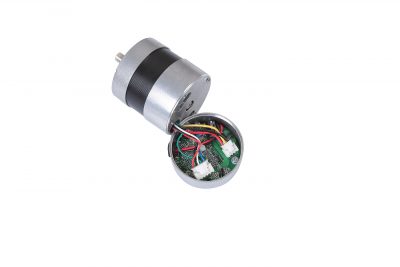
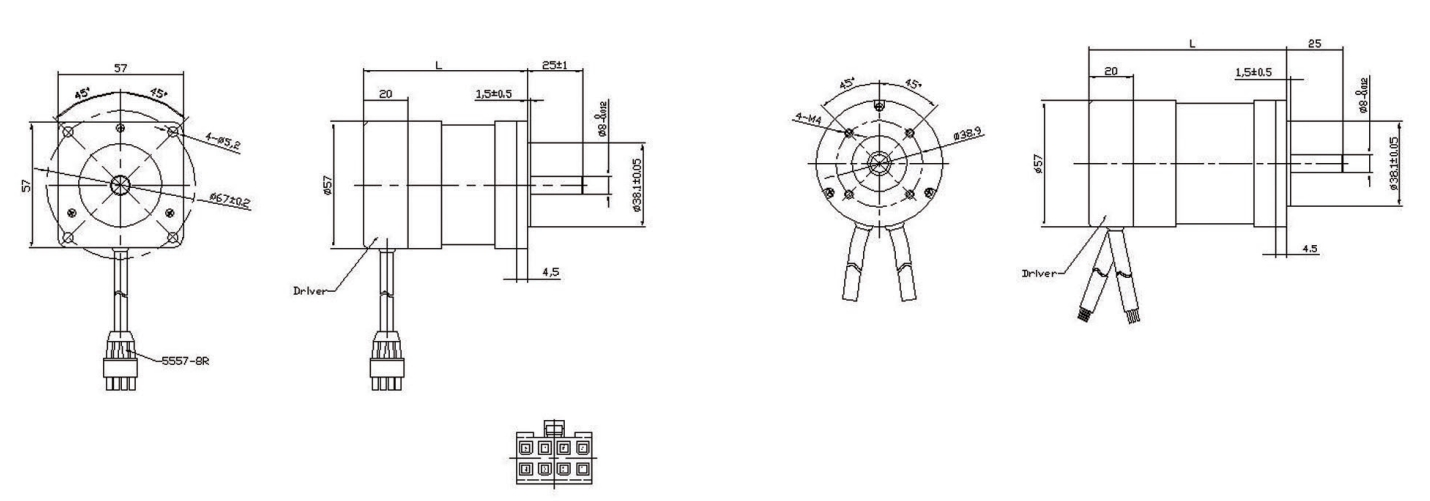
Integrated Motor Drives
Integrated drives combine the motor and controller in a single unit. They’re compact, reduce wiring complexity, and simplify installation. The NSP-BLDC4820A is an example—an integrated BLDC motor drive that packages the controller with the motor, supporting 18-60V input with up to 25A continuous current.
Best for:
– Space-constrained applications
– Simplified installation and maintenance
– Applications where motor and controller are always co-located
Separate Motor Drives
In this architecture, the controller is mounted separately from the motor, typically in a control cabinet or on a DIN rail. This allows:
- Better thermal management (controller in a cool, ventilated area)
- Easier maintenance and replacement
- Centralized control for multi-axis systems
- Use of standard motors with different controllers
Best for:
– Industrial machinery with control cabinets
– Multi-axis systems with centralized control
– Applications requiring different controller features for the same motor type
FOC-Optimized Controllers
Field Oriented Control requires specific hardware capabilities:
- High-resolution PWM (at least 10-bit, preferably 12-bit)
- Fast ADC sampling (synchronized with PWM)
- Sufficient DSP processing power
- High-resolution position feedback
Controllers like the NSP-FOC4830AS deliver 1500W with sophisticated FOC implementation, supporting both Hall sensor and encoder input. They’re suitable for applications requiring the smoothest possible motor control—precision positioning, smooth speed ramps, and maximum efficiency.
Thermal Management: The Silent Killer
Thermal management is the most underestimated aspect of motor controller selection. A controller that runs cool in a lab at 25°C may overheat and shut down in a factory at 45°C or when mounted inside an enclosure.
Understanding Thermal Ratings
Controller current ratings are always specified at a particular ambient temperature and cooling condition. A controller rated for “30A continuous at 25°C ambient with forced air cooling” might only handle 15A at 50°C ambient with natural convection.
The key parameters are:
– Rθ(j-a): Thermal resistance from junction (MOSFET die) to ambient, in °C/W
– Maximum junction temperature: Typically 150°C or 175°C for power MOSFETs
– Power dissipation: P = I²R (conduction loss) + switching losses
Practical Thermal Tips
- Don’t underestimate derating: For every 10°C above rated ambient, derate the current by approximately 10-15%
- Size your heatsink generously: A bigger heatsink costs very little compared to the cost of controller failure
- Consider fan cooling for continuous high-current applications: Even a small fan can double the effective current rating
- Mount in ventilated areas: Never mount a controller in a sealed enclosure without explicit derating
- Use thermal interface material properly: A thin, even layer of thermal compound between the MOSFETs and heatsink makes a significant difference
Real-World Application Examples
Electric Bicycle (E-Bike)
- Motor: 250-750W BLDC, 36V or 48V, with Hall sensors
- Controller requirements: 15-25A continuous, 30-40A peak, 36V or 48V, throttle input, regenerative braking
- Recommended type: Integrated or compact separate controller with PAS (Pedal Assist System) input
- Budget: $30-$150
Industrial Automation Stage
- Motor: 200-1500W BLDC, with encoder (2000+ lines)
- Controller requirements: 10-30A continuous, FOC preferred, EtherCAT or CANopen communication, ±10V analog or serial input
- Recommended type: Separate industrial drive with DIN rail mounting
- Budget: $200-$1,500
Garden Equipment (Lawn Mower/Trimmer)
- Motor: 500-2000W BLDC, 48V-72V, with Hall sensors
- Controller requirements: IP65 rating, 20-40A continuous, wide temperature range (-10°C to +60°C), simple throttle or switch input
- Recommended type: Integrated or ruggedized separate controller
- Budget: $50-$300
Drone / Multirotor
- Motor: 50-500W BLDC outrunner, sensorless
- Controller requirements: Ultra-lightweight, fast throttle response, 6S-12S LiPo compatible, PWM input
- Recommended type: Dedicated ESC (Electronic Speed Controller), one per motor
- Budget: $15-$80 per ESC
Automated Guided Vehicle (AGV)
- Motor: 100-500W BLDC per wheel, 24V or 48V, with encoder
- Controller requirements: CAN bus interface, FOC for smooth low-speed operation, regenerative braking, compact size
- Recommended type: Integrated wheel motor or compact separate drive
- Budget: $100-$500 per axis
Troubleshooting Common Controller Issues
Motor Vibrates but Doesn’t Rotate Smoothly
Likely causes:
– Hall sensor misalignment or wiring error (swap any two Hall wires and test)
– Wrong motor parameter settings (pole count, resistance, inductance)
– Inadequate PWM frequency for the motor’s inductance
– Controller operating in sensorless mode at too low a speed
Controller Shuts Down During Operation
Likely causes:
– Overcurrent: Check that load doesn’t exceed controller rating
– Overtemperature: Improve cooling, reduce ambient temperature, or reduce duty cycle
– Overvoltage: Check for regenerative braking voltage spikes, add a braking resistor if needed
– Undervoltage: Check power supply capacity and wiring
Erratic Speed Control
Likely causes:
– Electrical noise on control input signals (use shielded cables, proper grounding)
– PWM frequency too low (causing audible noise and control issues)
– Incorrect gain settings in the speed control loop
– Loose connections on Hall sensor or encoder cables
Motor Runs Hotter Than Expected
Likely causes:
– Controller current limit set too high (motor operating beyond rated current)
– Incorrect commutation timing (causing excessive circulating currents)
– Running in six-step mode when FOC would be more efficient
– Motor operating at low speed with high current (poor thermal dissipation)
Frequently Asked Questions
What’s the difference between a BLDC controller and a stepper driver?
A BLDC controller drives a permanent magnet synchronous motor with sinusoidal or trapezoidal commutation for continuous rotation. A stepper driver drives a motor in discrete steps for positioning applications. The motors, control algorithms, and typical applications are quite different.
Can I use a higher voltage controller than my motor’s rated voltage?
Yes, within reason. The controller’s voltage rating determines the maximum supply voltage. The motor’s voltage rating is the voltage at which it reaches its rated speed. Using a higher-voltage controller with the appropriate power supply allows the motor to run faster than rated, but you must limit the current to the motor’s rated value to avoid overheating.
Do I need regenerative braking?
For battery-powered applications (e-bikes, AGVs, scooters), regenerative braking extends battery life and reduces brake wear. For industrial applications with frequent deceleration, regeneration can reduce energy costs. For simple on/off applications, it’s not necessary and adds complexity.
How do I choose between 120° and 60° Hall sensor configuration?
Most BLDC motors use 120° Hall sensor spacing (sensors 120 electrical degrees apart). Some specialized motors use 60° spacing. Check your motor’s datasheet. Most controllers support one or the other—make sure the controller matches the motor. Running a 120° motor with a 60° controller setting (or vice versa) will cause severe vibration and possible motor damage.
What’s a braking resistor and do I need one?
A braking resistor dissipates excess energy during regenerative braking. When the motor decelerates rapidly, it acts as a generator and pumps energy back into the DC bus. If the bus voltage rises too high, the braking resistor switches on to absorb the excess energy. You need one if your application involves frequent, rapid deceleration of high-inertia loads, or if regenerative energy exceeds what the power supply can absorb.
Can I run two motors from one controller?
Some controllers support dual-motor operation, but generally it’s better to use one controller per motor. Sharing a controller means both motors get the same current command, which may not match their individual load requirements. In applications with mechanically coupled motors (like a four-wheel vehicle with two motors on one axle), a single controller can work if the mechanical coupling ensures equal load sharing.
Is FOC always better than trapezoidal (six-step) commutation?
For most performance-oriented applications, yes. FOC provides smoother torque, higher efficiency, and better low-speed performance. However, six-step commutation is simpler, requires less processing power, and can be adequate for applications where smoothness and efficiency aren’t critical (fans, pumps, simple conveyor drives). The cost difference has been shrinking as DSPs become cheaper.
Related selection path: For compact OEM axes where the BLDC driver can be integrated with the motor, read the integrated BLDC motor with driver guide.
Need Help Selecting the Right Motor?
ZGC Motors offers a complete range of BLDC motors, servo motors, stepper motors, and motor controllers for industrial, automotive, and outdoor power applications. Our engineering team can help you find the perfect solution for your project.