Planetary Gear Motor Selection Guide: From Specs to Installation
Planetary gear motors are the unsung heroes of mechanical engineering. They’re inside robotic joints, conveyor drives, medical equipment, electric valves, solar tracking systems, and hundreds of other applications where you need high torque in a compact package. Yet most engineers select them by comparing a few catalog specs without fully understanding the trade-offs involved.
Table of Contents
After working with planetary gearboxes for years across industries ranging from industrial automation to medical devices, I’ve seen the same selection mistakes repeated countless times. This guide walks you through everything that actually matters—starting from the fundamental mechanics of planetary gearing, through specification interpretation, to practical installation and maintenance.
How Planetary Gears Work: The Mechanics
The Basic Architecture
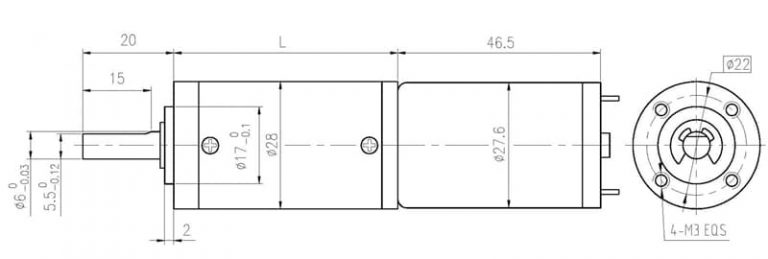
A planetary (epicyclic) gear set consists of four main components:
- Sun gear: The central gear that receives input from the motor shaft
- Planet gears: Typically 3-5 smaller gears that mesh with both the sun gear and the ring gear, mounted on a carrier
- Ring gear (annulus): The outer gear with internal teeth that surrounds the planet gears
- Planet carrier: The structure that holds the planet gears and provides the output shaft
The term “planetary” comes from the arrangement—the planet gears revolve around the sun gear like planets orbiting a star.
Gear Ratio Calculation
In the most common configuration (sun input, carrier output, ring fixed):
Ratio = (Ring teeth / Sun teeth) + 1
For example, with a sun gear of 12 teeth and a ring gear of 72 teeth:
Ratio = (72/12) + 1 = 7:1
This means the output shaft turns 7 times slower than the input, and torque is multiplied by approximately 7× (minus efficiency losses).
Why Planetary Gears Are Special
Several gear types can provide speed reduction and torque multiplication—spur gears, worm gears, harmonic drives. Planetary gears stand out for a specific combination of advantages:
High torque density: The load is shared among multiple planet gears (typically 3-5), not just one gear pair. This distributes the force across more tooth contacts, allowing a smaller, lighter gearbox to handle the same torque.
Compact form factor: The coaxial arrangement (input and output on the same centerline) allows very compact designs. A planetary gearbox with a 100:1 ratio fits in a fraction of the space required for an equivalent spur gear train.
High efficiency: Single-stage planetary gearboxes achieve 95-97% efficiency. Compare this to worm gears (50-90%) and harmonic drives (70-85%).
In-line configuration: Input and output shafts share the same axis, simplifying mechanical design and machine layout.
Multiple reduction stages: Stages can be cascaded to achieve very high ratios. Two stages give ratios up to 100:1, three stages up to 1000:1. Each stage adds some size, but the coaxial arrangement keeps the overall package compact.
Multi-Stage Configurations
For higher gear ratios, multiple planetary stages are connected in series:
- Single stage: Ratios from 3:1 to 10:1, efficiency 95-97%
- Two stage: Ratios from 10:1 to 100:1, efficiency 90-94%
- Three stage: Ratios from 80:1 to 1000:1, efficiency 85-90%
- Four stage: Ratios above 500:1, efficiency 80-85% (rare, used in specialized applications)
Each additional stage adds efficiency losses, backlash, and size. The design goal is always to use the fewest stages that achieve the required ratio.
Critical Specifications Explained
Gear Ratio
This is the most obvious specification, but there’s nuance. The nominal gear ratio determines the speed reduction and torque multiplication. However, the actual ratio can vary slightly from nominal due to manufacturing tolerances.
For positioning applications, ratio accuracy matters. A ratio tolerance of ±1% means that for every 100 revolutions of the motor, the output shaft could vary by ±1 revolution from the expected position. For high-precision applications, specify tighter ratio tolerance or use a gearhead with position feedback at the output shaft.
Output Torque
The gearbox’s rated output torque is the maximum continuous torque the gearbox can transmit without exceeding its thermal or mechanical limits. Key points:
- Nominal torque: The continuous torque rating at rated input speed, typically specified for 10,000+ hour service life
- Maximum torque: The peak torque for short durations (typically 2-3× nominal), limited by gear tooth strength
- Emergency stop torque: The maximum torque the gearbox can withstand during an emergency stop or crash, typically 5-10× nominal
A common mistake is to specify the gearbox based on the motor’s peak torque without considering the duty cycle. If the motor only produces peak torque for 10% of the operating time, the gearbox can be smaller than one rated for continuous peak torque.
Input Speed
The maximum input speed is limited by the gear dynamics and lubrication. Exceeding the rated input speed causes:
- Increased gear noise
- Accelerated wear
- Reduced bearing life
- Potential lubrication failure (oil foaming, grease breakdown)
For high-speed applications, check both the manufacturer’s maximum input speed rating and the maximum output speed. Some gearboxes have low maximum output speeds even with high gear ratios.
Backlash
Backlash is the rotational play at the output shaft when the input direction is reversed. It’s caused by clearance between meshing gear teeth and is one of the most important specifications for positioning applications.
- Standard backlash: 10-30 arc-minutes (0.17-0.5°)
- Low-backlash: 3-10 arc-minutes (0.05-0.17°)
- Ultra-low backlash: <3 arc-minutes (<0.05°)
- Zero-backlash: Achievable only with preloaded designs (harmonic drives, cycloidal reducers)
Backlash affects positioning accuracy but not necessarily repeatability. If a system always approaches the target from the same direction (unidirectional positioning), backlash doesn’t cause error. But if the direction of approach varies (bidirectional positioning), backlash directly contributes to positioning error.
Efficiency
As mentioned, single-stage planetary gears are very efficient (95-97%). But efficiency degrades with:
- More reduction stages
- Higher gear ratios within each stage
- Lower input speeds (where friction represents a larger proportion of total power)
- Poor lubrication or contaminated lubricant
- Worn bearings or gears
For energy-conscious applications, the gearbox efficiency directly affects motor size and power consumption. A 5% efficiency loss in a 2 kW system means 100W wasted as heat—that’s significant.
Radial and Axial Load Capacity
The gearbox output shaft bears the load from the driven mechanism. Exceeding the rated radial or axial load causes bearing damage and eventual gearbox failure.
- Radial load: Force perpendicular to the output shaft
- Axial load: Force along the output shaft axis
- Overhang moment: Bending moment caused by a load applied at a distance from the bearing support
For applications with belt or chain drives, pulleys, or overhung loads, calculate the actual radial load at the gearbox bearing (not at the load application point) and verify it’s within the gearbox’s rating. The radial load capacity decreases with increasing output speed and overhang distance.
Motor-Gearbox Integration

Matching Motor to Gearbox
The gearbox must be compatible with the motor in several dimensions:
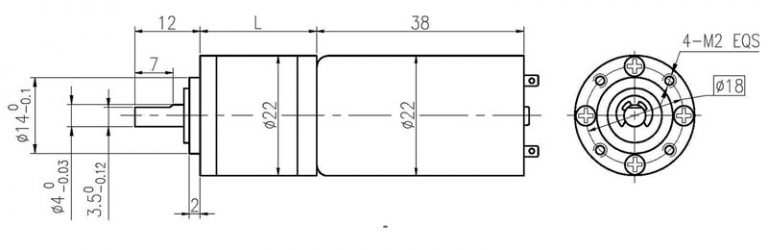
Mechanical interface: Mounting pattern (flange type, bolt circle diameter, pilot diameter), shaft type (straight, keyed, splined), and overall dimensions must match. Many manufacturers offer “motor-ready” gearboxes with standardized flanges for common motor sizes (NEMA 17, 23, 34, 42).
Torque rating: The gearbox’s input torque rating must exceed the motor’s continuous and peak torque output. Don’t forget to account for the gearbox’s own inertia—the reflected inertia at the motor shaft includes the gearbox’s input inertia.
Speed range: The motor’s operating speed range must be within the gearbox’s input speed rating. For a BLDC motor with a speed range of 0-5000 RPM and a gearbox rated for 0-6000 RPM input, there’s comfortable margin.
Service factor: Apply a service factor to account for load variability, shock loads, and duty cycle:
– Smooth loads (fans, conveyors): 1.0-1.2
– Moderate shock (mixers, machine tools): 1.3-1.5
– Heavy shock (crushers, reciprocating compressors): 1.7-2.0
Types of Motors Paired with Planetary Gearboxes
BLDC motors: The most common pairing for modern applications. BLDC motors offer high speed, good efficiency, and compact size. The gearbox reduces speed and increases torque to match the application requirements. Products like the 32JXE30K/28ZY47P-EN PM DC planetary gear motor combine a permanent magnet DC motor with a planetary gearbox for integrated solutions.
AC servo motors: For industrial servo applications, planetary gearboxes are available with input flanges designed for specific servo motor models. These gearboxes often feature low backlash and high torsional stiffness for servo performance.
Stepper motors: Planetary gearboxes are widely used with stepper motors to increase output torque and reduce reflected inertia (improving the inertia ratio). A stepper with a 10:1 gearbox provides 10× the torque but only 1/100 of the reflected inertia at the motor shaft.
Brushed DC motors: Traditional but still common in cost-sensitive applications. The combination of a brushed DC motor with a planetary gearbox is one of the most economical motor solutions available.
Integrated Motor-Gearbox Units
Integrated units that combine the motor and gearbox in a single housing are increasingly popular:
- Compact design: Shorter overall length, fewer mounting components
- Simplified procurement: One part number instead of two
- Guaranteed compatibility: Motor and gearbox are designed to work together
- Sealed construction: Many integrated units are sealed (IP65 or better) for harsh environments
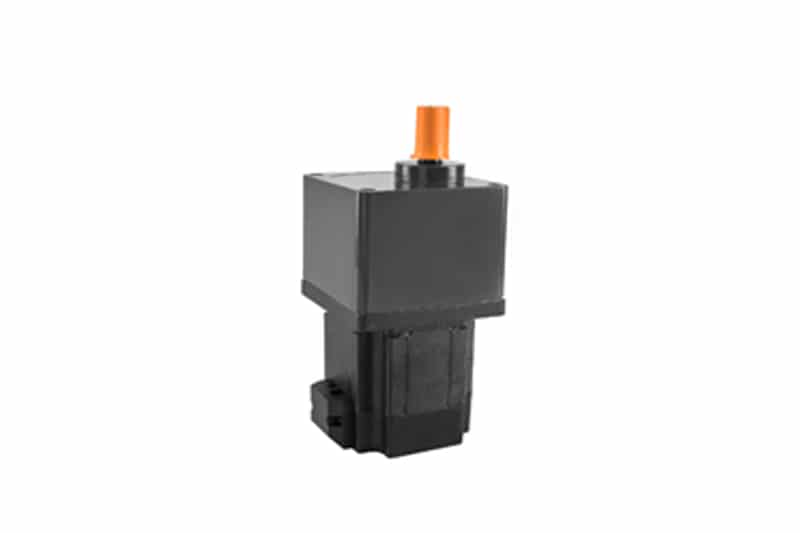
The 86DMW+6GUL BLDC gear motor is an example of an integrated design, combining a BLDC motor with a planetary gearbox for applications requiring high torque density in a compact package.
Application Guide
Robotics and Articulated Joints
Robot joints demand high torque, compact size, low backlash, and good backdrivability. Planetary gearboxes are the dominant choice for industrial robot joints (especially in collaborative robots) because:
- High torque density allows compact joint design
- Low-backlash versions (<5 arc-min) provide adequate positioning accuracy
- High efficiency reduces motor heating (important in confined robot structures)
- The coaxial design simplifies joint packaging
For collaborative robots (cobots) that work alongside humans, low inertia and backdrivability are important for safety. Strain wave (harmonic) gearboxes offer lower backlash but higher inertia and lower backdrivability than planetary designs.
Solar Tracking Systems
Solar panel tracking systems require slow, precise rotation with high holding torque. Typical requirements:
- Gear ratio: 500:1 to 5000:1
- Output torque: 100-5000 N·m
- Efficiency: Important for energy-positive tracking
- Environmental sealing: IP65 minimum, often IP67 for outdoor installation
Multi-stage planetary gearboxes with output flanges directly connected to the tracking structure are the standard solution. The high efficiency of planetary gearing ensures that the energy consumed by the tracking motors is small compared to the additional energy harvested through accurate tracking.
Medical Equipment
Medical devices impose unique requirements:
- Cleanliness: Lubricants must be food-grade or medical-grade where there’s any risk of contamination
- Noise: Medical environments require quiet operation (below 45 dB at 1 meter)
- Reliability: Equipment failure can directly affect patient safety
- Compactness: Wheelchairs, hospital beds, and surgical robots have tight space constraints
Low-backlash planetary gearboxes with special lubricants and sealed construction meet these requirements. For surgical robots, gearboxes with backlash below 1 arc-minute and high torsional stiffness are required.
Automotive (Window Lifters, Seats, Wipers)
Automotive gear motors operate in demanding conditions: temperature extremes (-40°C to +125°C), vibration, moisture, and millions of cycles. Planetary gearboxes used in automotive applications feature:
- Powder metal or sintered gears for cost-effective mass production
- Specialized greases that remain effective across the full temperature range
- Sealed construction (IP67 or equivalent) to prevent water and dust ingress
- High cycle life ratings (10-100 million cycles)
Conveyor Systems
Conveyor drives need reliable, continuous torque output. Key considerations:
- Service factor: Apply 1.5-2.0× for conveyor applications due to start-stop shock loads
- Thermal rating: Ensure the gearbox’s continuous thermal rating matches the actual duty cycle
- Mounting: Foot-mounted gearboxes are common for conveyor drives, providing rigid support
- Backlash: Generally not critical for conveyors—standard backlash is acceptable
Electric Valve Actuators
Valve actuators require high torque in a compact package for quarter-turn (90°) or multi-turn operation. Planetary gearboxes with worm gear final stages provide the self-locking feature that prevents valve creep under fluid pressure.
Agriculture and Outdoor Power Equipment
Agricultural equipment subjects gearboxes to severe contamination (dust, mud, water), shock loads, and temperature cycling. Gearboxes for these applications feature:
- High IP rating (IP65 minimum, IP67 preferred)
- Corrosion-resistant materials (stainless steel output shafts, coated housings)
- Enhanced seals and breathers
- Oversized bearings for shock load capacity
The 80DWM+RV040/050 series BLDC worm geared motor offers an alternative approach for applications where self-locking is needed or where right-angle output is required.
Lubrication and Maintenance
Grease vs Oil Lubrication
Grease lubrication is the most common choice for planetary gearboxes:
– Sealed for life—no maintenance required
– Good adhesion to gear surfaces
– Adequate for most industrial duty cycles
– Temperature range typically -30°C to +120°C
Oil lubrication is used for:
– High-power applications where heat dissipation is critical
– High-speed operation where grease would channel or overheat
– Applications requiring oil change intervals (oil can be replaced when degraded)
– Multi-stage gearboxes where oil flow to all stages is important
Lubrication Life
“Sealed for life” doesn’t mean the lubricant lasts forever. It means the gearbox is sealed and designed to operate for its rated service life without lubrication maintenance. But actual lubrication life depends on:
- Operating temperature: Every 15°C above 80°C roughly halves the grease life
- Speed: Higher speeds generate more heat, accelerating grease degradation
- Load: Higher loads increase gear contact stress and temperature
- Environment: Contamination accelerates wear and degrades lubricant
For critical applications, consider periodic oil analysis or grease sampling to monitor lubricant condition.
Bearing Maintenance
The output shaft bearings are the most common failure point in planetary gearboxes. Warning signs include:
- Increased noise (rumbling or grinding sounds)
- Increased vibration
- Reduced output shaft smoothness (rough rotation)
- Visible play in the output shaft
If bearing replacement is needed, use the manufacturer’s specified bearings and follow the recommended installation procedure (proper shaft fits, correct preload if applicable).
Selecting the Right Gearbox: A Practical Workflow
Step 1: Define the Application Requirements
Start with what the driven mechanism actually needs:
- Output speed (maximum, minimum, and typical)
- Output torque (continuous and peak)
- Duty cycle (percentage of time at various torque levels)
- Radial and axial loads on the output shaft
- Positioning accuracy (if applicable)
- Environmental conditions (temperature, contamination, IP rating)
- Mounting constraints (space, orientation, vibration)
Step 2: Calculate the Required Gear Ratio
Gear ratio = Motor speed / Required output speed
Choose a standard ratio close to the calculated value. Standard ratios follow preferred number series: 3, 4, 5, 7, 10, 15, 20, 25, 30, 50, 64, 100, etc.
If the calculated ratio falls between two standard values, consider whether slightly higher or lower output speed is acceptable. In some cases, adjusting the motor speed (by changing the motor winding or drive frequency) can bring the required ratio closer to a standard value.
Step 3: Verify Torque Rating
Required input torque = Required output torque / (Gear ratio × Efficiency)
Compare this with the motor’s continuous torque rating. The motor should be able to provide the required input torque with a margin of at least 20%.
Then verify that the gearbox’s rated output torque exceeds the required output torque (with appropriate service factor applied).
Step 4: Check Speed Ratings
Motor maximum speed ≤ Gearbox maximum input speed
Required output speed ≤ Gearbox maximum output speed (if specified)
Step 5: Verify Load Ratings
Calculate the actual radial and axial loads on the output shaft. Compare with the gearbox’s load ratings at the actual output speed and overhang distance. The rated radial load capacity decreases with increasing speed and distance from the bearing support.
Step 6: Confirm Environmental Suitability
Verify IP rating, temperature range, and material compatibility for the operating environment. For outdoor or washdown applications, specify the appropriate sealing level.
Step 7: Consider Life-Cycle Cost
Compare options based on total cost of ownership:
- Purchase price
- Energy consumption (efficiency affects motor size and power cost)
- Maintenance requirements (lubrication changes, bearing replacement intervals)
- Downtime cost if the gearbox fails
- Spare parts availability
The cheapest gearbox on initial purchase price may not be the most economical over a 5-10 year machine life.
Common Pitfalls
Overlooking Overhung Load
Mounting a pulley, sprocket, or coupling at a distance from the gearbox face creates a bending moment on the output shaft. This is the most common cause of premature gearbox failure. Always calculate the overhung load using:
Load = (Force × Distance) / Bearing support distance
And verify it’s within the gearbox’s rated capacity at the actual operating speed.
Ignoring Thermal Derating
Gearbox torque ratings are typically specified at an ambient temperature of 25-40°C. At higher ambient temperatures, the lubricant thins and loses its film strength, requiring derating. At 60°C ambient, you may need to derate the gearbox to 70-80% of its rated torque.
Using Excessive Backlash Compensation
Some engineers try to compensate for backlash in software by adding offset to position commands. This is a band-aid that introduces its own errors (the actual backlash varies with load and temperature). For applications requiring low backlash, specify a low-backlash gearbox rather than trying to compensate in software.
Mismatched Mounting Tolerances
Improper mounting (bolt patterns not aligned, shaft couplings not concentric, excessive mounting bolt torque) can preload the gearbox bearings, causing premature failure. Follow the manufacturer’s installation instructions precisely.
Frequently Asked Questions
Can a planetary gearbox be backdriven?
Yes, most planetary gearboxes can be backdriven (the output shaft can be rotated by an external force, driving the input shaft). The efficiency of the gearbox determines how easily this happens—high-efficiency gearboxes backdrive more easily. If self-locking is required, a worm gear final stage is needed (worm gears can be self-locking at ratios above 30:1).
What’s the typical service life of a planetary gearbox?
With proper selection and installation, 20,000-50,000 hours is typical for industrial applications. Factors that reduce life include: overloading, contamination, excessive speed, poor lubrication, and vibration. Some manufacturers specify service life based on bearing L10 rating (the life at which 10% of bearings are expected to fail).
How do I choose between a planetary gearbox and a worm gearbox?
Choose planetary when: high efficiency is needed (>90%), compact size matters, bidirectional operation is required, or low backlash is needed. Choose worm when: self-locking is required, right-angle output is needed, high shock load capacity is needed, or very low cost is the priority.
What lubricant should I use for extreme temperature applications?
For temperatures below -30°C, synthetic greases with low pour point are required. For temperatures above 120°C, high-temperature synthetic greases or circulating oil systems are needed. The gearbox manufacturer’s lubrication recommendation should always be followed—using the wrong lubricant can void the warranty and cause premature failure.
Can I replace just the gearbox without replacing the motor?
In most cases, yes—provided the mounting interface is compatible. However, if the gearbox and motor were supplied as a matched integrated unit, replacing just the gearbox may not be straightforward. Check with the manufacturer for replacement part compatibility.
How do I handle shock loads?
For applications with significant shock loads (impact loads, frequent jamming, sudden stops), specify a gearbox with a higher service factor (1.5-2.0×) and ensure the maximum torque rating covers the peak shock load. Some gearboxes include built-in torque limiters that slip during overload, protecting both the gearbox and the driven mechanism.
What’s the difference between a planetary gearbox and a cycloidal drive?
Cycloidal drives use eccentrically mounted cycloidal discs instead of gear teeth. They offer near-zero backlash, very high shock load capacity, and compact design. However, they’re typically more expensive, less efficient (70-85%), and noisier than planetary gearboxes. Cycloidal drives excel in applications requiring zero backlash with high shock loads—robotics, machine tools, and positioning tables.
Related guide: For BLDC-specific gearbox decisions, see our BLDC gear motor selection guide, including planetary, spur, and worm gearbox comparisons for OEM automation.
Need Help Selecting the Right Motor?
ZGC Motors offers a complete range of BLDC motors, servo motors, stepper motors, and motor controllers for industrial, automotive, and outdoor power applications. Our engineering team can help you find the perfect solution for your project.