Waterproof BLDC Motors for Garden and Outdoor Power Equipment
Garden equipment is going through a fundamental shift. Gas-powered lawnmowers, string trimmers, leaf blowers, and chainsaws are being replaced by battery-electric alternatives at a pace that surprised even industry insiders. California banned the sale of new gas-powered small engines starting in 2024, and dozens of other regions are following with similar legislation. But this transition isn’t just about regulations—electric garden tools are genuinely better in many ways, provided the motor inside can survive the harsh reality of outdoor use.
Table of Contents
- Why Garden Equipment Destroys Motors
- Why BLDC is the Right Motor Technology
- Waterproofing: The Engineering Challenge
- Key Motor Specifications for Garden Equipment
- Applications in Detail
- Battery System Considerations
- Sourcing and Quality Considerations
- The Competitive Landscape
- Environmental and Regulatory Drivers
- Frequently Asked Questions
The motor technology that makes this possible is the waterproof BLDC motor. Not “water-resistant” with a disclaimer, not “splash-proof” in controlled lab conditions—genuinely designed to operate while wet, muddy, caked in grass clippings, and baking in direct sunlight.
This article covers the engineering behind waterproof BLDC motors for garden equipment, explains why BLDC is the only serious choice for this application, and walks through what to look for when sourcing motors for outdoor power tools.
Why Garden Equipment Destroys Motors
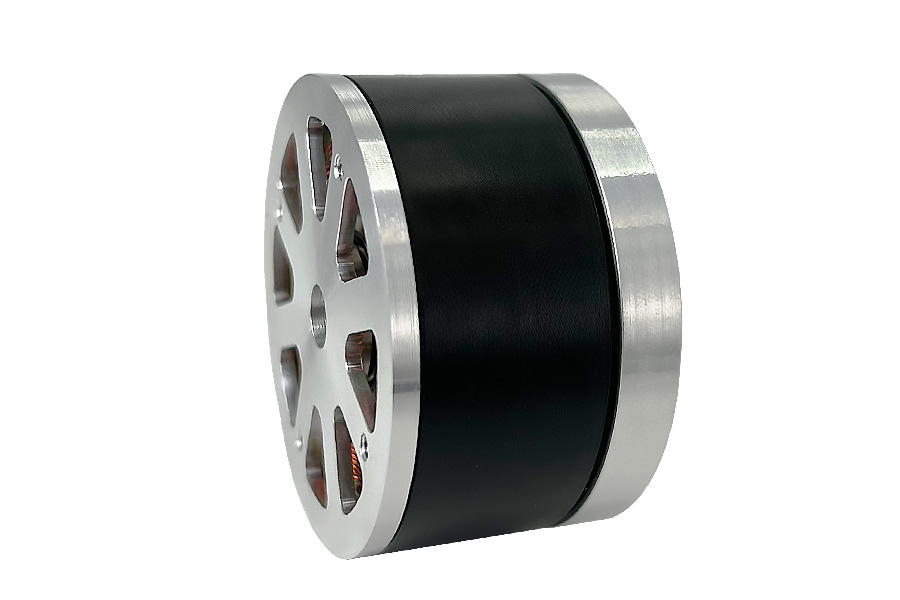
Before understanding the solution, you need to appreciate the problem. A lawn mower motor faces conditions that would be considered extreme abuse in most engineering contexts:
Water and Moisture
Lawn mowers cut wet grass. That’s not optional—it’s the primary function. Every pass through wet turf sprays a fine mist of water and chlorophyll-laden juice directly onto the motor housing. In heavy dew conditions, the motor housing can be continuously wet for the entire mowing session.
For a sealed motor, water on the outside isn’t the problem—it’s the water that gets inside. Temperature cycling creates pressure differentials that can pull moisture past seals. Condensation forms inside the housing when a hot motor cools down in humid air. Over months and years, this moisture corrodes stator windings, rusts bearings, and eventually causes insulation failure.
Contamination
Grass clippings are remarkably destructive. They contain moisture, silica (abrasive), chlorophyll (mildly corrosive), and sugars that caramelize and harden when heated. Inside a motor housing, grass clippings form an insulating layer that prevents heat dissipation, accumulate in bearing areas and cause wear, and create a nutrient-rich environment for biological growth if moisture is present.
Beyond grass, outdoor equipment encounters mud, soil particles, sand, leaves, twigs, and chemical contaminants (fertilizers, pesticides). Each presents its own threat to motor longevity.
Thermal Stress
Outdoor power tools operate in ambient temperatures ranging from near-freezing to over 40°C (105°F). The motor itself generates heat during operation. In direct sunlight on a hot day, the motor housing temperature can exceed 80°C even before electrical losses are considered.
The thermal cycling—cold start → rapid heating → extended operation → cool-down—stresses seals, causes differential expansion between dissimilar materials, and accelerates aging of insulation and lubricants.
Vibration and Shock
Lawn mowers vibrate continuously from blade rotation and surface irregularities. String trimmers experience high-frequency vibration from the trimmer head. Impact events (hitting rocks, roots, or buried objects) create transient shock loads that can damage bearings, warp shafts, or crack housings.
Duty Cycle
Unlike industrial motors that may run continuously in climate-controlled environments, garden equipment often operates in short, intense bursts. A homeowner might mow for 45 minutes, leave the mower in a hot garage for a week, then mow again. This intermittent duty cycle with long idle periods between heat-generating runs creates unique thermal management challenges.
Why BLDC is the Right Motor Technology
Brushless = No Wearing Electrical Parts
Traditional brushed DC motors have carbon brushes that physically contact the commutator. These brushes wear with use, generate dust, and create sparks. In a garden tool environment, the brushes are exposed to moisture and contamination that accelerate wear dramatically.
A BLDC motor eliminates brushes entirely. The commutation is performed electronically by the drive circuit, not by mechanical contact. This means:
- No brush wear (no scheduled maintenance, no replacement parts)
- No brush dust (cleaner internal environment)
- No sparking (important when operating near flammable materials like dry grass)
- Longer service life (limited by bearing and insulation life, not brush wear)
High Efficiency Means Longer Battery Life
Battery-powered garden tools live and die by their runtime. A motor that converts 85% of battery energy into useful mechanical work runs noticeably longer than one that only converts 65%. BLDC motors typically achieve 85-92% efficiency, while brushed DC motors in the same power range manage 60-75%.
For a lawnmower with a 5Ah, 56V battery pack (280 Wh of energy):
– BLDC motor at 87% efficiency: 244 Wh of mechanical output
– Brushed motor at 68% efficiency: 190 Wh of mechanical output
That’s a 28% difference in useful work from the same battery. In practice, this translates to mowing an extra 500-1000 square meters per charge.
Flat Torque for Consistent Cutting
BLDC motors maintain relatively flat torque across their speed range. When the blade encounters thick grass, the motor maintains cutting torque without stalling. Brushed motors, by contrast, lose significant torque at higher speeds and can bog down in heavy grass.
Compact Size and Light Weight
BLDC motors offer higher power density than brushed motors of equivalent output. This matters enormously for handheld tools like string trimmers and hedge trimmers, where every gram affects user comfort and fatigue. A BLDC string trimmer motor can be 30-40% lighter than a brushed motor with the same power output.
Electronic Speed Control
BLDC motors integrate naturally with electronic speed control. Variable speed triggers allow the user to match the tool speed to the task—reduced speed for light trimming, full speed for heavy cutting. This not only improves user control but also extends battery life and reduces noise.
Waterproofing: The Engineering Challenge
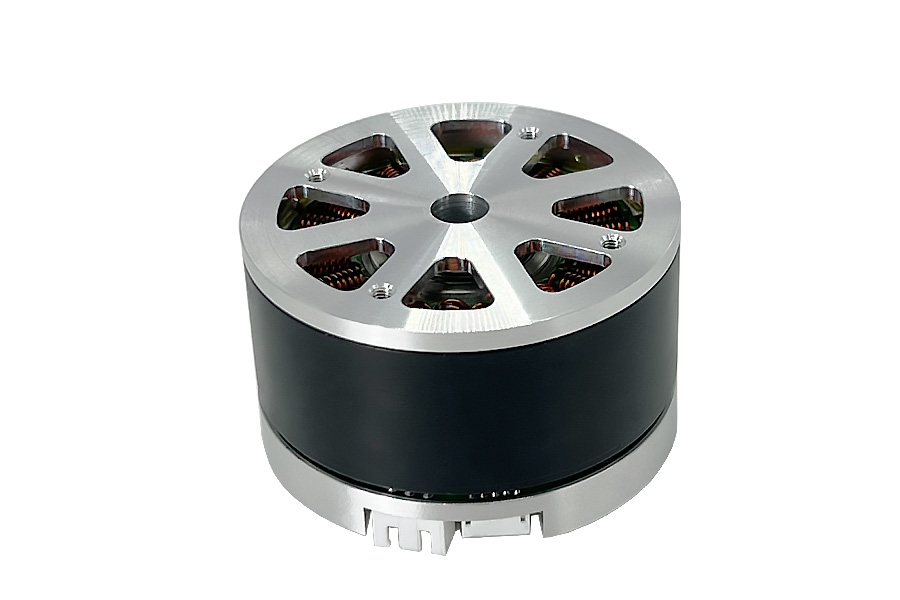
IP Rating Decoded
The IP (Ingress Protection) rating system defines the level of protection against solid objects and liquids:
- IP44: Protected against solid objects >1mm and splashing water from all directions
- IP54: Protected against dust (limited ingress) and splashing water
- IP55: Dust-protected and water jet from any direction
- IP65: Dust-tight and water jet from any direction
- IP66: Dust-tight and powerful water jet from any direction
- IP67: Dust-tight and temporary immersion (up to 1 meter for 30 minutes)
- IP68: Dust-tight and continuous immersion (manufacturer specifies depth and duration)
For garden equipment, IP65 is the minimum acceptable rating. IP67 is preferable for equipment that may be left outside in rain or used in extremely wet conditions. IP68 is typically overkill and adds cost without practical benefit.
Sealing Strategies
Achieving high IP ratings in a motor requires sealing at multiple points:
Shaft seal: The output shaft penetrates the motor housing and is the most vulnerable sealing point. Lip seals (V-ring or radial shaft seals) are the standard solution. They must accommodate the shaft’s rotational speed, temperature range, and axial/radial movement while maintaining a positive seal against water and fine particles.
For high-performance garden equipment, dual lip seals with a grease-filled interstitial cavity provide redundancy—if one seal fails, the second continues to protect.
Housing joints: The motor housing is typically split at the end bells (where the stator core is clamped between two housing halves). This joint must be sealed with an O-ring, gasket, or liquid sealant. The sealing method must accommodate thermal expansion without losing compression.
Cable entry: Power cables enter the housing through a gland or connector. Cable glands with IP-rated sealing (rubber grommets that compress around the cable) are the standard approach. The cable itself should have water-resistant insulation.
Breather/pressure equalization: As the motor heats up during operation, internal pressure increases. Without pressure equalization, this pressure pushes against the seals and can force them open. A waterproof breather vent (typically a Gore-Tex or similar membrane) allows pressure equalization while preventing water ingress. This is a critical but often overlooked detail.
Internal Corrosion Protection
Even with perfect sealing, some moisture will eventually penetrate. Internal corrosion protection measures include:
- Conformal coating on stator windings: A thin polymer coating (epoxy, polyurethane, or parylene) applied to the wound stator prevents moisture from reaching the copper wire insulation. This is the single most important moisture protection measure for the electrical components.
- Corrosion-resistant bearings: Stainless steel or ceramic bearings resist rust. For applications where cost is critical, standard bearings with corrosion-resistant cages and special grease can provide adequate protection.
- Zinc or nickel plating: Internal metal surfaces that aren’t coated or painted should be plated to prevent rust.
- Stainless steel fasteners: All internal screws, bolts, and washers should be stainless steel (A2 or A4 grade).
Thermal Management in Sealed Motors
Sealing creates a thermal challenge: the motor cannot dissipate heat through air exchange with the environment. All heat must be conducted through the housing walls or radiated from the surface.
Design strategies to manage this:
- Aluminum housing: Aluminum has excellent thermal conductivity (~200 W/m·K compared to ~50 W/m·K for steel). An aluminum housing conducts heat from the stator to the external surface efficiently.
- Finned housing: External cooling fins increase the surface area for heat dissipation. For garden equipment, the fins should be widely spaced to prevent grass clipping accumulation.
- Thermal potting: In some designs, the air gap between the stator and housing is filled with thermally conductive potting compound. This dramatically improves heat transfer but adds weight and cost.
- Oversized stator: Simply using a motor frame one size larger than necessary provides thermal margin. A 1000W motor in a 1500W frame runs cooler and lasts longer.
Key Motor Specifications for Garden Equipment
Power Rating
Garden equipment power requirements vary widely:
| Tool | Typical Power | Voltage | Current |
|---|---|---|---|
| String trimmer | 200-500W | 18-40V | 10-20A |
| Hedge trimmer | 300-600W | 18-40V | 15-25A |
| Leaf blower | 500-1500W | 40-56V | 15-30A |
| Lawn mower (small) | 500-1000W | 40-56V | 15-25A |
| Lawn mower (large) | 1000-2000W | 56-72V | 20-40A |
| Chainsaw | 500-2000W | 36-56V | 15-35A |
| Pressure washer | 500-1500W | 40-56V | 15-30A |
The trend toward higher voltage systems (48V, 56V, 72V) allows more power without excessive current, which reduces cable losses and allows smaller, lighter wiring.
Speed and Torque
Garden tools typically require:
- Lawn mowers: 2500-4000 RPM blade speed with high starting torque (to overcome inertia of the blade and initial grass resistance)
- String trimmers: 5000-10000 RPM with moderate torque
- Leaf blowers: 15000-20000+ RPM (high speed for airflow generation)
- Chainsaws: 5000-10000 RPM with high stall torque
The motor’s torque-speed curve must match the tool’s requirements. For lawn mowers, a motor with high torque at 3000-4000 RPM is ideal. For leaf blowers, a high-speed motor (10000+ RPM) with adequate torque is needed.
Outer Rotor vs Inner Rotor
BLDC motors for garden equipment come in two configurations:
Inner rotor (inrunner): The rotor spins inside the stator. Higher speed capability, typically used with a gearbox for speed reduction. Common in lawn mowers where blade speed (3000-4000 RPM) is well within the motor’s speed range.
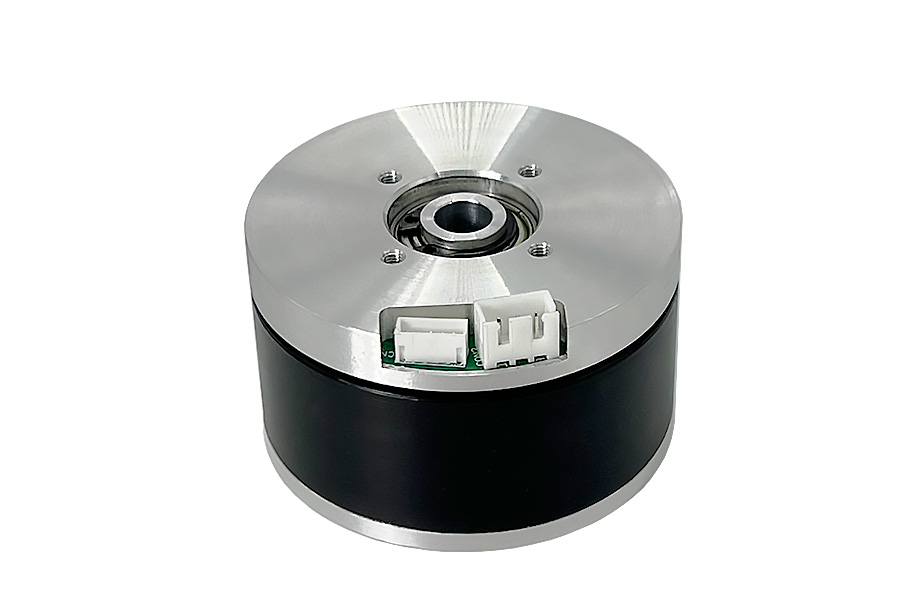
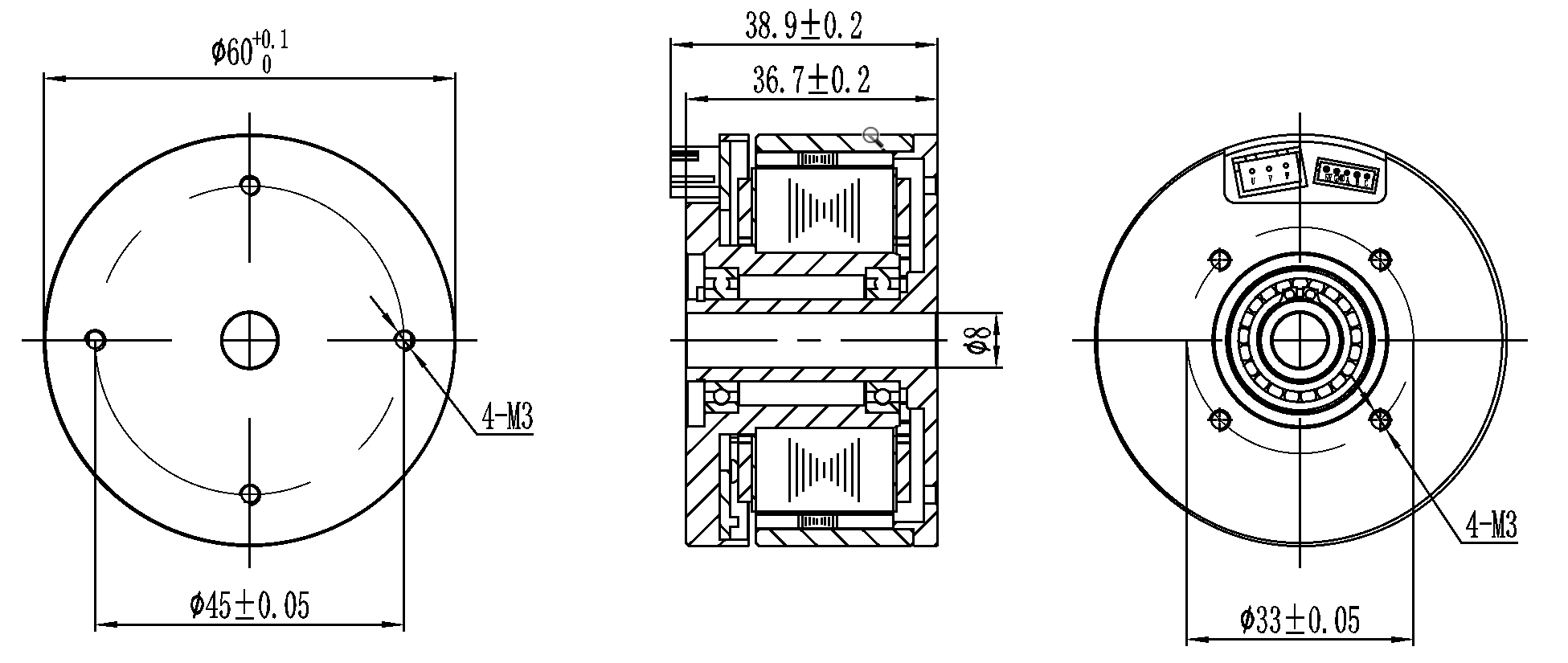
Outer rotor (outrunner): The stator is inside and the rotor spins around it. Lower speed, higher torque per unit size. The outer rotor can be directly connected to the load (blade, trimmer head) without a gearbox, reducing complexity and cost. The 50mm outer rotor BLDC motor series exemplifies this approach—high torque in a compact form factor suitable for direct-drive applications.
For garden tools, outer rotor designs are increasingly popular because they eliminate the gearbox (one less failure point, less maintenance, lower cost) while providing adequate torque directly.
Insulation Class
Motor insulation is rated by temperature class:
- Class B: 130°C maximum
- Class F: 155°C maximum
- Class H: 180°C maximum
For garden equipment operating in high ambient temperatures with intermittent duty cycles, Class H insulation is strongly recommended. It provides the thermal margin needed to handle worst-case conditions without degradation.
Applications in Detail
Battery-Powered Lawn Mowers
The lawn mower is the most demanding garden equipment application for BLDC motors. Requirements:
- Power: 1000-2000W for residential mowers, up to 3000W for commercial/professional models
- Torque: Must maintain blade speed in thick, wet grass without stalling
- Waterproofing: IP65 minimum (cutting wet grass sprays water directly at the motor deck)
- Durability: 200-500 hour service life for residential, 1000+ hours for commercial
- Weight: Motor weight directly affects mower maneuverability
Design considerations:
– Direct drive (motor connected directly to blade) is simplest and most reliable
– Belt drive allows the motor to be positioned away from the cutting chamber (better for cooling and maintenance access)
– The motor mounting must absorb vibration without loosening over time
– The blade disc acts as a flywheel, providing inertia for consistent cutting through thick grass
String Trimmers and Brush Cutters
String trimmers demand a unique combination of high speed and moderate torque in a lightweight package:
- Power: 200-500W for residential, up to 1000W for commercial brush cutters
- Speed: 6000-10000 RPM at the trimmer head
- Weight: Critical—every 100 grams affects user fatigue during extended use
- Vibration: The motor must withstand high-frequency vibration from the trimmer head
Outer rotor BLDC motors are ideal for string trimmers because they provide high torque at moderate speed, allowing a simple speed reduction (via a small gear ratio or belt) to the trimmer head speed.
Leaf Blowers
Leaf blowers prioritize airflow over torque. The motor drives an impeller that generates high-velocity air:
- Power: 500-1500W
- Speed: 15000-25000 RPM (higher speed = higher airflow velocity)
- Efficiency: Critical for battery runtime—the motor must convert battery energy to impeller rotation efficiently
High-speed inner rotor BLDC motors with low inertia rotors are the standard choice. The motor’s speed is often directly matched to the impeller’s optimal speed without any reduction.
Chainsaws
Electric chainsaws require high stall torque to handle the kickback forces when the chain encounters resistance:
- Power: 500-2000W (higher power for professional chainsaws)
- Torque: Very high starting torque and stall torque
- Safety: The motor controller must handle chain jam events gracefully (rapid current limiting without component damage)
- Weight: Important for operator comfort and safety
Hedge Trimmers
Hedge trimmers present a challenging thermal environment—the motor is enclosed in the trimmer body with limited airflow:
- Power: 300-600W
- Duty cycle: Often intermittent (cut for 10-20 seconds, reposition, cut again)
- Blade speed: Typically 1000-3000 RPM (reciprocating blade)
- Vibration: Must be minimized for operator comfort
Battery System Considerations
Voltage Trends
The garden tool industry has been moving toward higher battery voltages:
- 18-20V: Entry-level tools, adequate for light-duty trimmers and small blowers
- 40V: Mid-range, the most popular platform voltage for residential tools
- 56V: Professional-grade, supports higher power tools (large mowers, chainsaws)
- 72-80V: Emerging for commercial/professional equipment requiring maximum power
Higher voltage allows more power for the same current, which means smaller wires, less resistive loss, and better performance. The trade-off is battery cost and the need for series cell configurations with more sophisticated battery management.
Battery-Motor Matching
The motor and battery must be matched for optimal performance:
- Battery internal resistance: High internal resistance limits peak current delivery, causing voltage sag under load. This reduces available motor power. Quality battery packs with low-resistance cells (high C-rating) maintain voltage under load.
- Cell configuration: A 10S2P battery (10 cells in series, 2 in parallel) provides higher capacity and lower resistance than a 10S1P configuration.
- Thermal management: Both the battery and the motor generate heat. In compact tool designs, thermal coupling between battery and motor can be a concern.
Sourcing and Quality Considerations
What Separates a Good Garden Motor from a Bad One
Several factors distinguish quality waterproof BLDC motors for outdoor use:
Sealing quality: Not just the IP rating, but the quality and durability of the seals. Cheaper motors use inferior lip seals that degrade quickly. Quality motors use double-sealed bearings and Viton or silicone seals that maintain elasticity over a wide temperature range.
Conformal coating: The stator windings must be properly coated. Dip coating is common for budget motors but may leave thin or uneven coverage. Spray coating with UV-resistant material is better. Potting (encapsulation in epoxy) provides the best protection but adds weight and complicates repairs.
Bearing quality: Sealed, pre-lubricated bearings from reputable manufacturers (NSK, SKF, NTN, or equivalent) last significantly longer than generic bearings. The bearing grease must be rated for the temperature range and must not wash out if water penetrates the seal.
Magnet quality: NdFeB magnets are standard in BLDC motors, but the grade matters. Lower-grade magnets lose flux at elevated temperatures, reducing motor output. N42SH or N48SH magnets (with “SH” temperature rating) maintain performance at temperatures up to 150°C.
Shaft material and finish: Stainless steel shafts resist corrosion. The shaft surface finish affects seal life—too smooth and the seal can’t maintain lip pressure, too rough and the seal wears quickly.
Testing and Validation
Before committing to a motor supplier, verify performance with these tests:
- IP test: Verify the claimed IP rating with actual water spray or immersion testing
- Thermal test: Run the motor at rated load in a temperature chamber at maximum ambient temperature and monitor winding temperature
- Life test: Run the motor through simulated duty cycles (on/off cycling, load cycling) for hundreds of hours
- Salt spray test: Expose the motor to salt spray (ASTM B117) to verify corrosion resistance—especially important for coastal applications
- Vibration test: Subject the motor to simulated field vibration levels to verify bearing and seal integrity
Manufacturing and Supply Chain
For OEM customers producing garden equipment, additional considerations include:
- Minimum order quantities (MOQ): Some motor manufacturers require large MOQs for custom designs
- Customization options: Shaft dimensions, winding configuration, connector type, cable length, and housing color can often be customized
- Lead times: Motor manufacturing lead times of 8-16 weeks are typical; plan accordingly
- Quality certifications: ISO 9001, CE, UL, and RoHS compliance are typically required for garden equipment sold in regulated markets
The Competitive Landscape
The market for waterproof BLDC motors in garden equipment is growing rapidly. Key players include:
- Specialized motor manufacturers: Companies like ZGC Motors that produce BLDC motors specifically designed for outdoor and garden applications
- Integrated solution providers: Companies that supply motor + drive + battery as a complete system
- Large tool brands: Major power tool companies (DeWalt, Makita, EGO, Greenworks) that design custom motor systems for their tools
The trend is toward higher power density (more watts per kilogram), better efficiency, and improved waterproofing at lower cost. Outer rotor designs are gaining market share in direct-drive applications.
Environmental and Regulatory Drivers
Emission Regulations
The primary driver for electrification of garden equipment is emission regulation. Small gasoline engines (below 25 HP) produce disproportionate air pollution:
- A typical gas lawnmower produces as much smog-forming emissions in one hour as a typical car driving 45 miles
- Gas-powered leaf blowers produce significantly more particulate matter and VOCs than electric alternatives
- California’s AB 1346 (effective 2024) prohibits the sale of new gas-powered small off-road engines, including lawnmowers and leaf blowers
These regulations are expanding globally, creating strong and sustained demand for electric garden equipment and the waterproof BLDC motors that power them.
Noise Regulations
Many municipalities restrict the hours during which gas-powered garden equipment can be used due to noise complaints. Electric tools are significantly quieter:
- Electric lawn mower: 65-75 dB at the operator
- Gas lawn mower: 85-105 dB at the operator
- Electric leaf blower: 65-75 dB
- Gas leaf blower: 90-110 dB
The lower noise level of BLDC-powered tools isn’t just about regulations—it’s a genuine user experience advantage.
Sustainability and Lifecycle
The environmental benefit of electric garden tools extends beyond direct emissions:
- No oil changes or fuel spills
- Lower total energy consumption (electricity vs gasoline)
- Longer product life (BLDC motors have fewer wearing parts)
- Easier recycling (no fuel system, no oil contamination)
Frequently Asked Questions
Can a waterproof BLDC motor actually be submerged?
IP67-rated motors can handle temporary submersion (up to 1 meter for 30 minutes). IP68-rated motors can handle extended submersion at specified depths. However, submersion capability assumes the motor is stationary. If the motor is running while submerged, the dynamic pressure at the shaft seal increases dramatically, and the rated submersion depth may not apply.
How long do waterproof BLDC motors last in garden equipment?
With proper design and quality components, 500-2000 hours is achievable for residential use (roughly 5-10 years of typical homeowner use). Commercial-grade motors with superior bearings and seals can reach 3000-5000+ hours. The primary failure modes are bearing wear and seal degradation, not electrical failure.
Do I need a special motor controller for outdoor use?
The motor controller/drive should also be protected against moisture and contamination. Many garden tool designs house the controller in a separate sealed compartment from the motor, which simplifies sealing of both components. The controller should also include thermal protection, overcurrent protection, and fault handling suitable for the outdoor environment.
What’s the best voltage for battery-powered garden tools?
For residential use, 40V is the sweet spot—it balances power, weight, and cost. For professional/commercial tools, 56V or 72V provides more power for heavy-duty applications. The 18-20V platform is adequate for lightweight tools (trimmers, small blowers) but struggles with high-power applications (large mowers).
Can outdoor-rated BLDC motors be used in other wet applications?
Absolutely. The same waterproof BLDC motor technology used in garden equipment is applicable to: marine applications (bilge pumps, thrusters), food processing (washdown environments), automotive (under-hood actuators), and outdoor signage (moving displays). The key is ensuring the IP rating, temperature range, and corrosion protection match the specific application requirements.
How does cost compare between waterproof BLDC and sealed brushed DC motors?
Waterproof BLDC motors typically cost 2-4× more than equivalent brushed DC motors. However, the total cost of ownership often favors BLDC due to: longer service life, no brush replacement, higher efficiency (smaller battery), and better performance. For professional equipment where downtime cost is high, BLDC is almost always more economical over the product lifecycle.
What maintenance do waterproof BLDC garden motors need?
Ideally, none. That’s the point of sealed construction. However, for maximum service life: clean the motor exterior after each use (remove grass clippings and debris), inspect the shaft seal for visible damage periodically, store the equipment in a dry location when not in use, and avoid pressure washing the motor directly (high-pressure water can defeat even IP67 seals).
Need Help Selecting the Right Motor?
ZGC Motors offers a complete range of BLDC motors, servo motors, stepper motors, and motor controllers for industrial, automotive, and outdoor power applications. Our engineering team can help you find the perfect solution for your project.